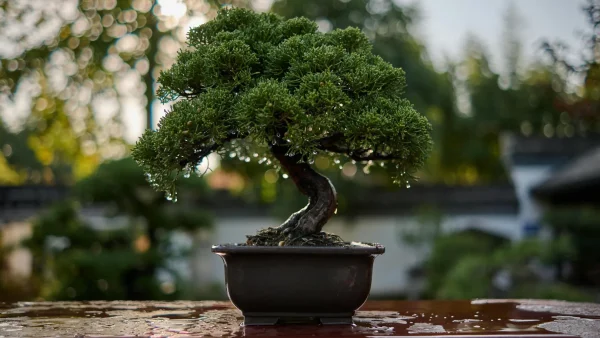

Most people kill their first bonsai. Not because they don’t care – because they start with the wrong tree. Walk into any garden centre and the cheapest bonsai on the shelf is almost always a juniper, wired into a pretty shape and sold with a ceramic dish. Junipers are outdoor trees. Put one on your kitchen windowsill and it will be dead within a month. This is not your fault. It’s a bad match between species and setting.
Choosing the right tree for your actual situation – your light, your climate, whether you have a garden or just a flat – matters far more than any pruning technique or watering schedule. Get the species right and the rest follows. Get it wrong and nothing else you do will save it.
Ficus (Ficus retusa or Ficus ginseng) – Best Overall Indoor Beginner
If you live in a flat or don’t have outdoor space, buy a Ficus. It is the most tolerant indoor bonsai available, and that tolerance is genuine rather than marketing copy. Ficus handles inconsistent watering better than almost any other species, drops and regrows leaves when stressed rather than dying outright, and will survive in lower light than most bonsai require – though it will be happier near a bright window.
The Ficus ginseng, with its bulbous exposed roots and thick trunk, is the variety you’ll see most often. It looks impressive without much effort. The Ficus retusa has smaller, neater leaves and a more classic bonsai silhouette. Both are equally forgiving. Either will work.
One warning: Ficus drops leaves when moved. If you buy one, pick its spot and leave it there. Moving it from a shop to your home will cause a drop – that is normal and the leaves come back. Moving it every week will kill it.
Chinese Elm (Ulmus parvifolia) – Best All-Rounder
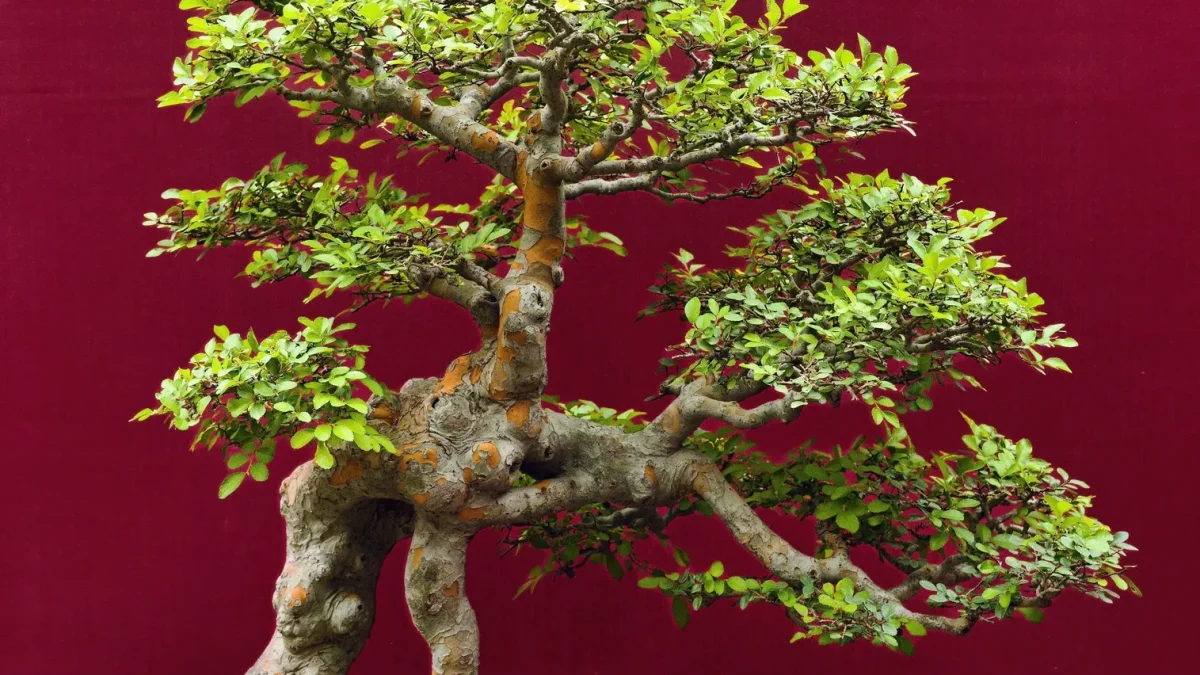
Chinese Elm is the most recommended beginner species among serious bonsai growers, and for good reason. It tolerates a range of conditions – indoor or outdoor, temperate or subtropical – it develops excellent ramification (the fine branching that makes bonsai look refined), and it responds well to regular pruning.
In mild climates, Chinese Elm is semi-evergreen: it holds its leaves through winter but may drop some if temperatures swing sharply. Outdoors in summer, indoors near a bright window in winter – that seasonal rhythm works well and teaches you something about how bonsai responds to its environment.
If you want to take bonsai seriously beyond the beginner stage, Chinese Elm rewards the investment. The fine leaf structure and branching pattern develop beautifully over years. It’s a tree you’ll still want to be growing in five years.
Ficus vs. Chinese Elm: Which One to Actually Buy
Pure indoor grower with no outdoor space and inconsistent schedule? Buy a Ficus. You have a windowsill, possibly forget to water for a week sometimes, and want a tree that won’t punish you for it. Ficus is your tree.
Have some outdoor space and want to take bonsai more seriously? Buy a Chinese Elm. The seasonal variation and need for some outdoor time in summer make it slightly less foolproof, but the results are more rewarding and the tree is more versatile as your skills develop.
Jade Plant (Portulacaria afra) – Best for Neglectful Beginners
The Jade plant, specifically the dwarf jade (Portulacaria afra rather than Crassula ovata), is the closest thing bonsai has to unkillable. It’s a succulent, which means it stores water in its leaves and stems and is built for drought. Forget to water it for two weeks? It shrugs. Overwater it consistently? That is actually how you kill a succulent – the one thing most beginners do with other species (underwater) is the one thing this tree genuinely handles.
It won’t develop the tight, refined structure of a Chinese Elm over time, and the aesthetic is more sculptural than classical bonsai. But if your track record with plants is poor and you want to build confidence before investing in something more demanding, start with a jade. It’s an honest recommendation, not a beginner’s consolation prize.
Why You Should Avoid Juniper Indoors (and What to Do if You Already Have One)
Junipers are beautiful outdoor bonsai and excellent for beginners who have a garden or balcony. They need full sun, good air circulation, and a cold winter dormancy period. None of those conditions exist on a kitchen shelf or in a centrally heated living room.
If you’ve already bought one and brought it inside, move it outside as soon as weather permits. Even a cold balcony is better than indoors. Give it at least four hours of direct sun a day, reduce watering compared to summer, and don’t panic if growth slows – junipers do less in winter. They’re not dying. They’re dormant. The difference matters.
For indoor growing, choose one of the species above. For outdoor growing with a garden or sheltered balcony, juniper is genuinely one of the best choices you can make. The key is putting the right tree in the right place – everything else in bonsai follows from that.